
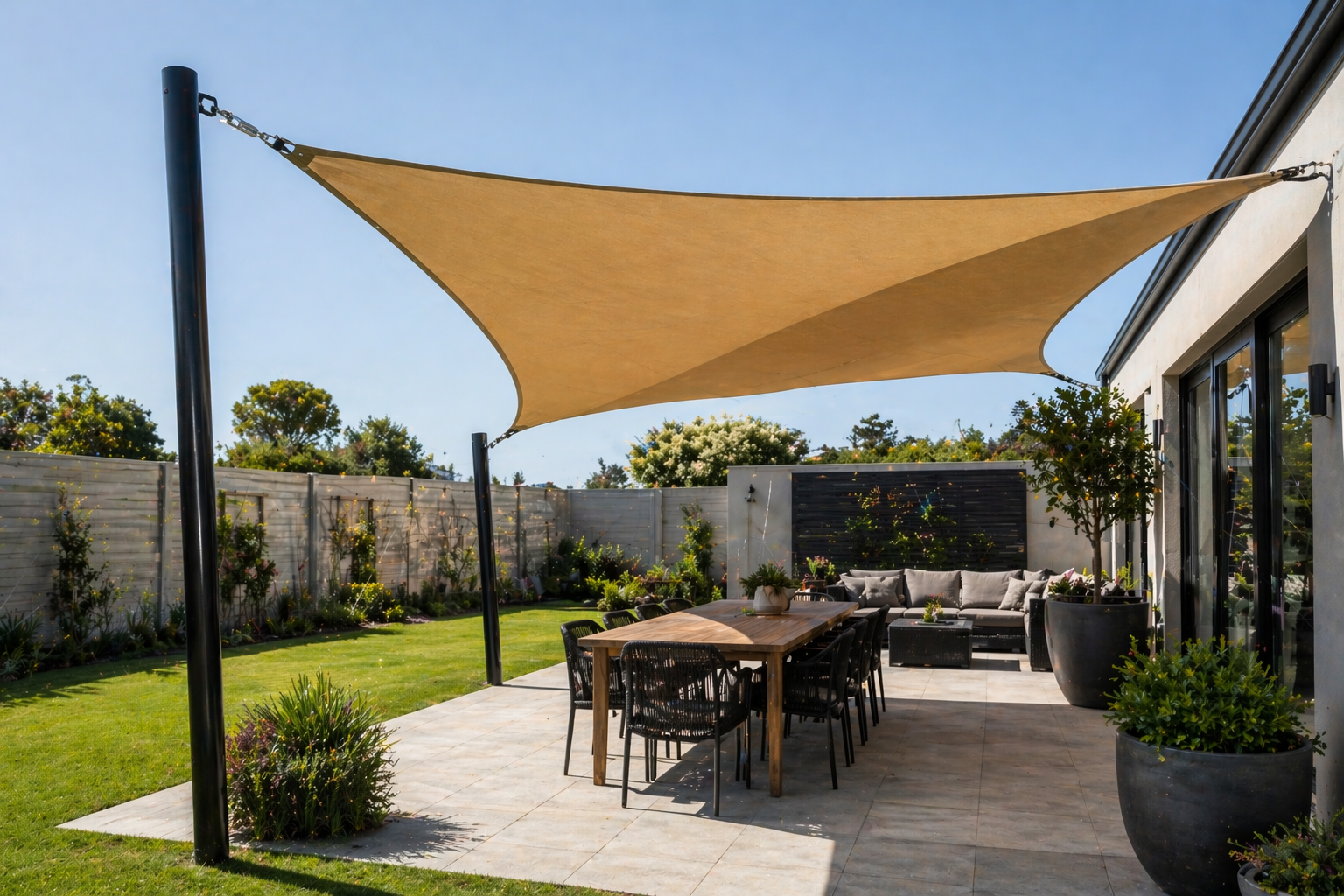
If you’ve started looking into shade sails, you’ve probably already noticed one thing. Prices are all over the place.
Some quotes seem surprisingly low, others are much higher than expected, and it is not always clear why. That usually leads to confusion, especially if you are trying to budget properly before committing.
The truth is, shade sails are not priced as a standard product. What you pay depends on the size, the material, how the sail is installed, and the specific conditions of your space. Two setups that look similar at a glance can end up costing very different amounts.
This guide breaks it down properly so you know what to expect in Cape Town and what actually affects the price before you start requesting quotes.
Get a Clear Price for Your Shade Sail
If you already have an idea of your space, fill in the form below and we will give you a straightforward quote based on your layout, size, and material requirements.
What You Can Expect to Pay for a Shade Sail in Cape Town
The easiest way to understand pricing is to start with rough ranges. These are not fixed prices, but they give you a realistic idea of what most people end up paying.
For smaller shade sails, usually used over patios, small gardens, or parking areas, prices can start from around R2,500 to R6,000. These are typically simpler installations with fewer fixing points and less material.
Medium-sized shade sails, which are common for residential outdoor areas or small business spaces, generally fall between R6,000 and R15,000. At this level, you start seeing stronger materials and more structured installations.
For larger shade sails or more complex layouts, prices can range from R15,000 to R40,000 or more. These are often custom-designed to cover bigger areas such as schools, restaurants, or commercial outdoor spaces.
At face value, that seems straightforward. But most people quickly realise that these ranges do not tell the full story.
Material plays a major role. Shade netting is more affordable and works well for blocking sunlight and reducing heat, but it does not protect against rain. Waterproof shade sails cost more because the fabric is heavier and needs proper tensioning to prevent water from pooling.
Shape also affects pricing. A simple triangle or square is easier and cheaper to manufacture and install. Custom shapes, or sails that need to fit around buildings or unusual spaces, require more planning and increase the cost.
Fixing points are another key factor. A sail needs to be anchored properly to walls, poles, or existing structures. If those are not already in place, additional posts may need to be installed, which adds to the overall cost.
Durability is something people often overlook at the beginning. A cheaper sail may look fine initially, but if it cannot handle wind or tension properly, it will not last. A properly made and installed sail will stay tight, stable, and functional over time.
Not Sure What Material or Size You Need?
If you are unsure what will work best for your space, fill in the form and we will guide you before you commit to anything.
What Actually Affects the Cost and What Most People Overlook
Once you understand the general price ranges, the next step is knowing what really pushes the price up or down. This is where most of the variation comes in.
Size is the obvious one, but it is not just about making the sail bigger. Larger sails need stronger tension and better support to hold their shape. That increases both material and installation requirements.
The layout of your space also matters more than people expect. A clean, open area is much easier to work with than a space with obstacles, uneven surfaces, or limited fixing points. The more complicated the space, the more work goes into getting the sail installed properly.
Wind exposure is especially important in Cape Town. Areas that are more exposed require stronger anchoring and sometimes additional structural support. This is not optional. It is necessary to ensure the sail remains stable and safe.
The angle and positioning of the sail also affect cost. Shade sails are designed with slope and tension so that water can run off and the structure remains stable. Getting this right may require additional posts or adjustments, which increases the cost slightly but improves performance significantly.
Installation is often where the biggest differences appear. A simple installation using existing walls or structures is more affordable. A setup that requires new poles, concrete bases, or custom mounting will cost more, but it also ensures the sail is secure.
Where Most People Get It Wrong
A common mistake is focusing only on the initial price.
Some people choose the cheapest option, only to deal with issues later. The sail may sag, flap in the wind, or wear out faster than expected. In some cases, it needs to be replaced entirely within a short period.
Another mistake is underestimating installation. A shade sail might seem simple, but proper tensioning and anchoring are critical. If it is not installed correctly, it will not perform the way it should.
There is also the issue of choosing the wrong material for the job. For example, using shade netting in an area where rain protection is needed, or choosing waterproof fabric without proper slope. These decisions affect how well the sail actually works once installed.
Taking the time to get the right setup from the beginning usually avoids all of these problems.
Final Thoughts on Shade Sail Prices in Cape Town
So what should you realistically expect to pay?
Most shade sails in Cape Town fall somewhere between R2,500 and R40,000, depending on the size, material, and installation requirements.
Where your project sits within that range depends on your space and how you plan to use the sail.
The important thing is to focus on getting the right solution, not just the lowest price. A well-installed shade sail should last, perform properly, and actually improve your space.
Rushing into a cheap option often leads to problems. Taking the time to do it properly usually leads to a much better result.
Get Advice Before You Commit
If you are comparing options or unsure what will work best, fill in the form and we will help you make the right decision before you spend money.