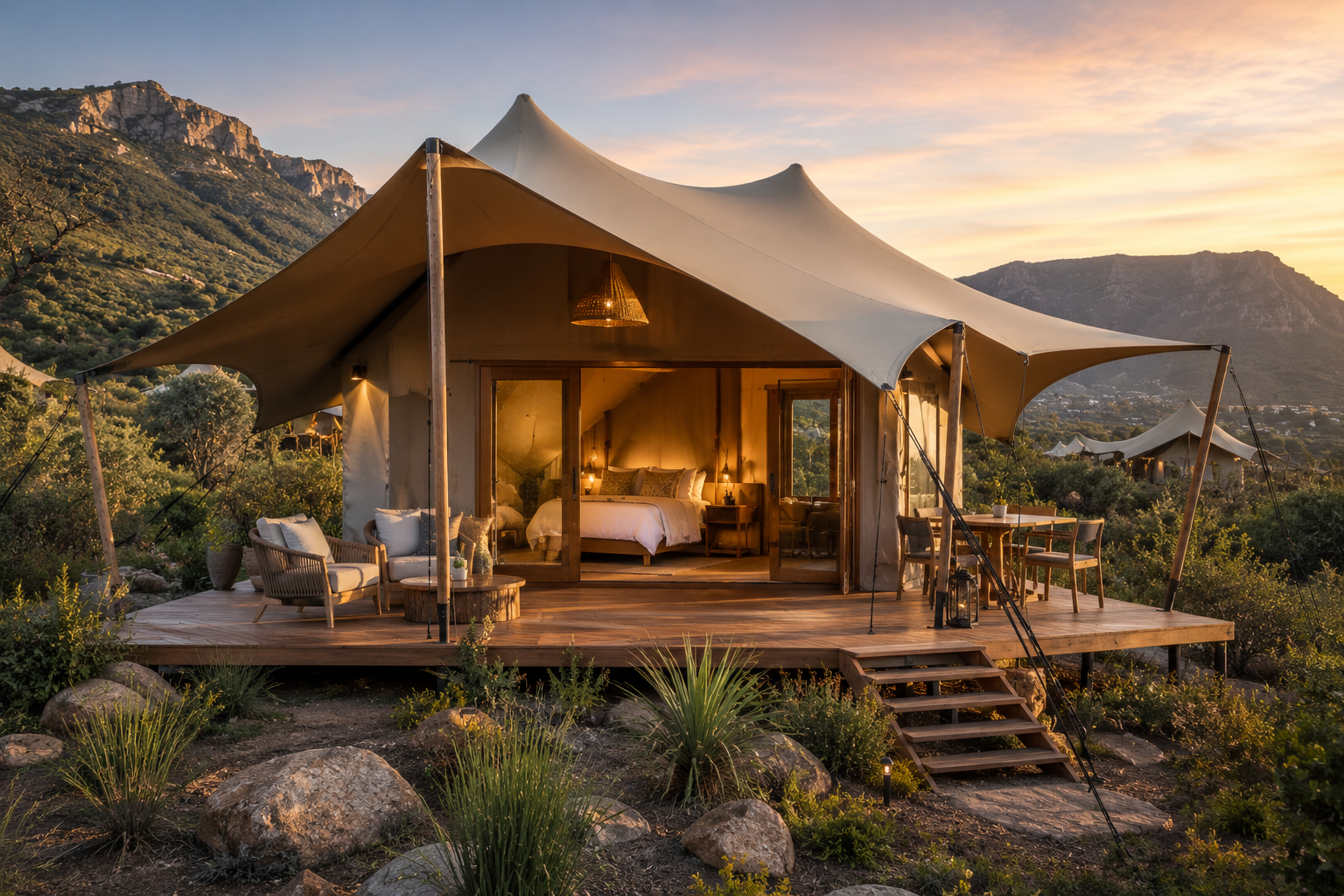
Create distinctive guest accommodation with custom glamping tents designed for lodges, resorts, farms, campsites and hospitality developments across South Africa.
Cape Stretch Tents supplies glamping tents for projects ranging from private farm stays and small eco-retreats to larger tourism and accommodation developments. Each tent can be planned around the intended guest experience, site conditions and practical requirements of the property.
Custom Glamping Tents for South African Properties
Glamping allows property owners to offer guests a closer connection to nature without relying on basic camping accommodation.
A well-designed glamping tent can provide a comfortable sleeping and living environment while preserving the atmosphere of the surrounding landscape. It can be used to create standalone guest units, private suites, family accommodation, honeymoon tents or groups of units forming a complete retreat.
The right design will depend on the location, expected occupancy, climate and level of comfort the property wants to provide. A coastal retreat may have different ventilation and weather requirements from a mountain lodge, bush property or inland farm.
Cape Stretch Tents works with clients to plan tents around the intended use of each unit rather than supplying a generic structure that may not suit the site.
Request a Glamping Tent Quote
Tell us where your project is located, how many tents you need and how many guests each unit should accommodate.
Luxury Glamping Tents for Lodges and Resorts
Lodges and resorts can use glamping tents to expand accommodation capacity while maintaining a strong sense of place.
The tents may be positioned to take advantage of mountain, vineyard, forest, river or bush views. Their placement can create privacy between guests while allowing each unit to feel integrated into the property.
Luxury glamping accommodation may include sleeping areas, lounge space, private decks and room for selected furnishings. The internal layout should be planned around the number of guests, the required furniture and how people will move through the space.
Bathroom and kitchen facilities may be incorporated into the broader unit design or provided through separate supporting structures, depending on the project and site conditions.
Glamping Tents for Farms and Wine Estates
Farms and wine estates often have unused land, scenic viewpoints and quieter sections of the property that can support guest accommodation.
Glamping tents can help transform these areas into farm stays, weekend retreats, romantic accommodation or small hospitality ventures. They can offer guests a more immersive experience than a conventional room while allowing the property to retain its rural character.
The layout should consider access roads, parking, water, electricity, drainage and the distance between guest units and the main farm facilities. Privacy, views and exposure to weather should also influence where each tent is positioned.
Properties in the Cape Winelands and other tourism regions can use glamping accommodation to complement wine tasting, weddings, farm experiences and seasonal events.
Request a Glamping Tent Quote
Tell us where your project is located, how many tents you need and how many guests each unit should accommodate.
Glamping Tents for Campsites and Eco-Retreats
Established campsites can introduce glamping tents as an upgrade for guests who want an outdoor experience without bringing their own equipment.
The tents can be used as individual accommodation units or grouped into a dedicated glamping section with shared facilities. This can help the campsite serve couples, families, international travellers and guests who may not normally choose traditional camping.
Eco-retreats can use glamping tents to create low-density accommodation that keeps guests close to the landscape. The design and placement should minimise unnecessary disturbance while still providing safe access and practical services.
Any claim that a development is environmentally friendly should be supported by the full project design, including construction methods, energy use, water management, waste systems and day-to-day operations.
Glamping Accommodation for Game Farms and Nature Properties
Game farms, private reserves and nature-based properties can use glamping tents to offer accommodation in areas where the surroundings are central to the guest experience.
Units may be positioned near walking routes, viewing areas or quieter parts of the property while maintaining appropriate separation from wildlife and operational zones.
The design should account for heat, wind, insects, rain and the normal conditions of the region. Access for staff, maintenance and emergency response also needs to be considered.
Wildlife safety cannot be provided by the tent alone. The property must have suitable site management, guest rules, fencing where required and operating procedures appropriate to the animals and environment.
Boutique Glamping Tents for Private Hospitality Developments
A glamping project does not need to begin with a large number of units.
Property owners can start with one or a few well-positioned tents and expand as demand develops. This approach may suit small guest farms, wellness retreats, wedding venues and private landowners testing a new accommodation concept.
A smaller development still requires careful planning. Each tent should have a clear purpose, suitable access and enough privacy to justify the guest experience being offered.
The quality of the surroundings, furnishings, bathroom facilities and guest service will influence the success of the accommodation just as much as the tent itself.
Request a Glamping Tent Quote
Tell us where your project is located, how many tents you need and how many guests each unit should accommodate.
Glamping Tents for Wedding and Event Venues
Wedding estates and event venues can use glamping tents to provide convenient overnight accommodation for couples, families and guests attending functions.
The tents may form a temporary or longer-term accommodation area away from the main venue while remaining close enough for practical guest transport.
This can add value for venues that host destination weddings, retreats, festivals and multi-day private events. It may also reduce the need for guests to travel to separate accommodation after a late event.
The accommodation area should be planned around privacy, noise, lighting, pathways and access to bathroom facilities.
Glamping Tents for Coastal, Mountain and Bush Conditions
South Africa includes a wide range of climates and landscapes. A glamping tent that works well in one region may need to be adapted for another.
Coastal properties may experience salt exposure, strong wind and moisture. Mountain and highland locations can have cooler temperatures, heavy rain and rapidly changing conditions. Inland and bush areas may experience high daytime temperatures, cold nights and seasonal storms.
The orientation of the tent, surrounding vegetation, natural drainage and exposure to prevailing weather should all be assessed before the final layout is approved.
No tent should be positioned in a flood-prone channel, unstable area or location where falling branches, erosion or other obvious hazards have not been addressed.
Choosing the Right Glamping Tent Size
The appropriate size will depend on how many guests the unit must accommodate and what facilities will be placed inside.
A compact couple’s tent may require space for a bed, luggage and limited seating. A family unit may need multiple sleeping areas, additional storage and a larger deck. More luxurious units may include lounge furniture, work surfaces or separate internal sections.
The available site area should not be the only factor guiding the size. Guests also need comfortable circulation space and practical access to doors, windows and furnishings.
Planning the internal layout before confirming the structure can help avoid a tent that feels too cramped once it is furnished.
Request a Glamping Tent Quote
Tell us where your project is located, how many tents you need and how many guests each unit should accommodate.
Glamping Tent Interiors and Guest Comfort
The tent provides the main shelter, but the complete guest experience depends on the interior and supporting facilities.
Beds, flooring, lighting, electrical points, ventilation, storage and furniture should be selected around the target market and nightly rate. A tent marketed as luxury accommodation must offer a level of comfort and finish that supports that positioning.
Temperature management is also important. Natural ventilation may be sufficient in some regions, while other locations may require additional heating, cooling or insulation measures.
Interior furnishings and decorative elements should be suitable for the environment and expected frequency of guest use.
Decks, Platforms and Supporting Structures
Glamping tents are commonly installed on raised or prepared platforms that provide a stable, level base.
The platform can also form an entrance deck or private outdoor seating area. Its dimensions should suit the tent footprint, door position and any furniture placed outside.
Decks, platforms, steps and balustrades must be designed and constructed appropriately for the site. The supporting structure should account for soil conditions, drainage, expected loads and local weather.
These elements may need to be completed by suitably qualified contractors and should not be treated as decorative additions only.
Planning Utilities for a Glamping Development
Water, electricity, sanitation and drainage should be considered early in the planning process.
Some developments may use shared bathroom and kitchen facilities, while others may provide private amenities for each unit. The best arrangement depends on the property, guest expectations and available infrastructure.
Electrical installations should be completed safely by appropriate professionals. Plumbing and wastewater systems must suit the location and comply with any applicable requirements.
Remote sites may require alternative power or water solutions, but these should be assessed as part of the complete development rather than after the tents have been installed.
Request a Glamping Tent Quote
Tell us where your project is located, how many tents you need and how many guests each unit should accommodate.
Access, Housekeeping and Maintenance
A glamping unit must remain accessible after guests begin using it.
Staff need practical routes for housekeeping, linen changes, maintenance and the delivery of supplies. These routes should be planned without unnecessarily reducing guest privacy.
Materials exposed to sun, wind, rain and dust will require ongoing care. Cleaning procedures, inspection of fittings and prompt attention to damage can help extend the useful life of the structure.
The maintenance plan should also cover decks, pathways, drainage, electrical systems and other supporting elements around the tent.
Planning Permission and Site Approval in South Africa
A glamping development may require approval from the municipality, landowner, estate, body corporate or other relevant authority.
Requirements can depend on the property zoning, number of units, intended commercial use, supporting services and whether permanent structures are being added.
The client should confirm applicable planning, building, environmental, fire and operational requirements before proceeding with the full development.
Cape Stretch Tents can provide information about the proposed tent structure, but formal approvals and professional certification should be obtained from the relevant authorities and appointed specialists where required.
Ordering Glamping Tents in South Africa
The process begins with understanding the property, intended use and number of tents required.
Useful initial information includes the project location, site photographs, approximate dimensions, expected guest capacity and preferred style of accommodation. Details about decks, bathrooms, access and utilities also help define the broader project.
The tent specification can then be developed around the site and commercial goals of the property. Larger developments may be planned in stages, particularly where the owner wants to launch an initial group of units before expanding.
Manufacturing, delivery and installation arrangements should be confirmed according to the final design, project location and scope of work.
Request a Glamping Tent Quote
Tell us where your project is located, how many tents you need and how many guests each unit should accommodate.
Glamping Tents Supplied Across South Africa
Cape Stretch Tents is based in Cape Town and assists clients with glamping tent projects across South Africa.
Enquiries are welcome from the Western Cape, Eastern Cape, Northern Cape, Gauteng, KwaZulu-Natal, Limpopo, Mpumalanga, North West and Free State.
We work with lodge owners, farmers, resort developers, campsite operators, wedding venues and private property owners. The feasibility, delivery and installation arrangements for projects outside Cape Town are assessed according to the location, number of units and overall project requirements.
Build a Distinctive Glamping Destination in South Africa
Custom glamping tents can help turn an attractive property into a memorable accommodation experience, whether you are developing a private retreat, expanding an existing lodge or launching a new tourism venture.
Cape Stretch Tents supplies glamping tents for hospitality and tourism projects across South Africa, with each enquiry considered according to the site, intended use and project scope.